01Beam Studio
Build a new product line instead of pushing the SDK harder
WhyProspects weren't rejecting analytics — they had no app. POCs proved clients would pay to replace their agency-built apps.
Adrien Balcioglu · AI Product Manager · Product Strategy & AI Transformation
Product leader across B2B SaaS, mobile and AI. I spot the signal, build the business case and ship — from 0 to 10M+ end users at a martech scale-up to a group-wide AI programme steered by ROI.
By the numbers
01Work
Three products I built at Bryj Technologies (ex-FollowAnalytics), a Paris-born martech scale-up now headquartered in Silicon Valley ($35M raised) — Aug 2020 to May 2026, serving 30+ enterprise accounts across insurance, banking, automotive, retail and energy in EMEA, NA and LATAM.
Clients I worked withPacSun · Allianz · Renault · Saks Fifth Avenue · Dooney & Bourke
Scope15-person worldwide product & tech team · 4 releases a month
Our analytics SDK kept stalling in sales for one reason: most prospects had no mobile app to instrument. Across 30+ enterprise accounts, the blocker wasn't analytics — it was the app itself.
Before building anything, I ran manual POCs — WebView apps on client websites, instrumented with the SDK. Clients then asked for pricing to replace their costly agency-built native apps: the demand was real, and it was a new product line, not a feature.
A shared native SDK (iOS & Android) as an internal delivery tool, plus a reusable plugin library (loyalty, push, deep links, maps) that removed custom work per contract. Scaled into a self-serve SaaS: enter a URL, drag-and-drop, publish to App Store and Google Play — segmented into managed (high ARR) and SMB self-serve.
Product lead from POC to launch, leading a 15-person worldwide product & tech team shipping 4 releases a month. I also worked on pricing and packaging: a freemium tier free up to 1,000 users, self-serve plans at $599 and $1,499/month, and a managed offer for high-ARR accounts. I built the pricing tool used for launch projections and break-even analysis.
0 → 10M+ mobile app end users · <24h from URL to published app · Dooney & Bourke live on both stores in 3 weeks, with several websites merged into one app, in-house payment and Salesforce Commerce Cloud integration. The business shift: from custom work per contract to a self-serve SaaS, so revenue no longer scales with development hours.
The inherited platform had fragmented data collection, high running costs and a data model that couldn't support ML — a ceiling on both margin and the product roadmap.
Rather than sell engagement as a standalone tool, build it into the app builder so every app ships with retention built in — and make the data layer ML-ready first.
Full refactor — cleaner pipeline, optimised event storage, a better segmentation engine and a redesigned push flow with dynamic audiences. On top: an ML-ready architecture enabling predictive segmentation (churn propensity, purchase likelihood).
Fully involved end to end, from the platform refactor to the April 2026 launch of Beam Engage — positioned as the first engagement and retention solution built directly into an app builder.
Data for 3M+ users managed on the rebuilt pipeline — clean, structured and used to train the ML models.
Mobile marketers couldn't connect first-party data to paid channels; campaign strategy ran on gut feel.
Turn years of marketing data into a product: an AI layer that plans campaigns from real benchmarks, so marketers go from weeks of set-up to minutes to first campaign.
Data ingestion, audience syncs to Google, Meta and TikTok Ads, and a live performance feedback loop. A generative layer, trained on years of marketing data, provides AI-assisted campaign strategy grounded in real benchmarks.
Fully involved in the 0-to-1 launch as ChatROI (October 2024) and in its repositioning as Beam Acquire within the Beam suite.
In a 6-week internal campaign test: click-through rate ×6 and ROI +542%.
02Now
I currently lead the internal AI rollout of a listed group (~2,600 employees). The programme is steered as a portfolio: prioritised use cases, measured value, owned cost and governed adoption.
Group-wide AI rollout
External assistants deployed across the organisation — Claude, ChatGPT, Microsoft Copilot.
Value-driven steering
Use-case prioritisation, ROI measurement, adoption & usage tracking.
Cost ownership
TCO, licences, contracts, renewals.
AI governance
Usage compliance, risk assessment, validation process for new tools, market watch.
Enablement
Access provisioning, user onboarding, AI discovery and vibe-coding workshops.
Value hypothesis
Time saved × loaded cost per employee, based on published studies.
Break-even
The minimum usage that pays for the licence — e.g. 40 minutes saved per user per month for a $30 assistant.
Risk & compliance
Every new tool goes through a risk assessment and a validation process before access is granted.
Pilot, then scale
A 20-seat pilot measures real usage before any group-wide licence.
03Decisions
Seniority shows in what you decide — and in what you say no to.
WhyProspects weren't rejecting analytics — they had no app. POCs proved clients would pay to replace their agency-built apps.
WhyFreemium to remove the entry barrier, self-serve plans for SMBs, a managed offer for high-ARR accounts — sized with a break-even model built for launch.
WhySold separately, engagement is one more tool to buy. Built into the app builder, every app ships with retention from day one.
WhyPer-seat pricing didn't hold at the scale of a 2,600-person group, and the group-wide assistant already covered the need.
WhyA group-wide assistant for everyone, premium meeting notes only for managers and project leads — piloted on 20 + 10 seats before scaling.
04How I work
I validate theses with hands-on POCs before committing to a build. Beam Studio began as manual WebView apps instrumented with the SDK — the pricing demand came from clients, not assumptions.
I steer by outcomes, not output: use-case prioritisation, ROI, adoption and usage tracking. The AI programme I run today is anchored to measurable savings.
Usage compliance, risk assessment and a validation process for new tools are built into how work ships — not bolted on after the fact.
A no-code builder that publishes an app in under 24h. I turn complex systems into products people can actually use.
05Lab
Hands-on projects where I prototype with AI agents, MCP and LLMs — the same tools I help companies adopt.
AI tool evaluations as a product: risk assessments, use cases and updates for companies rolling out AI internally.
An agent-driven dev workflow on GitHub: Markdown specs in tickets, coding agents that pick them up, review agents on pull requests.
An AI-first push notification platform exposed through MCP, open-core under AGPL v3.
View on GitHub ↗A Claude skill that builds a personalised daily brief from calendar, email and chat — on demand or every weekday.
View on GitHub ↗Lecture audio to study notes: Whisper transcription, then full notes and recap sheets in the language you choose.
Native Mac apps and browser tools I design and build with coding agents, from idea to download. Most of them run entirely on your machine, with no account.

A cat that lives on your screen, wakes when you type and asks for breaks. Pair it with a friend and your two cats work side by side.
Download for Mac ↗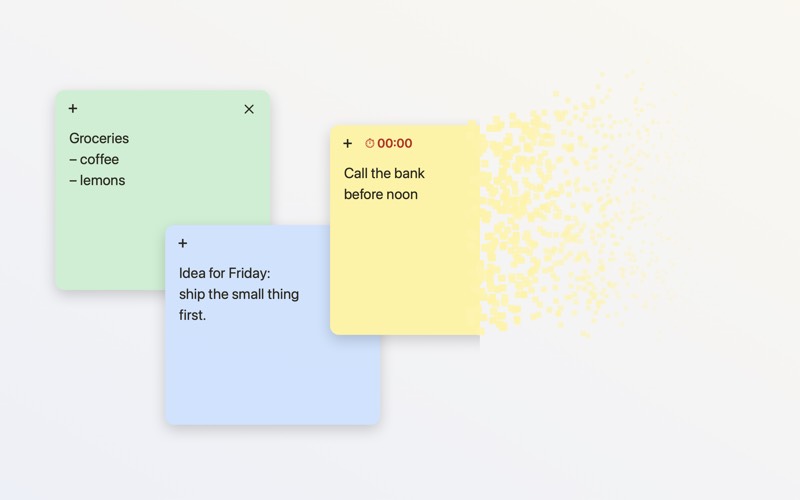
Sticky notes with a timer. When the time is up, the note turns to dust on screen and is gone.
Download for Mac ↗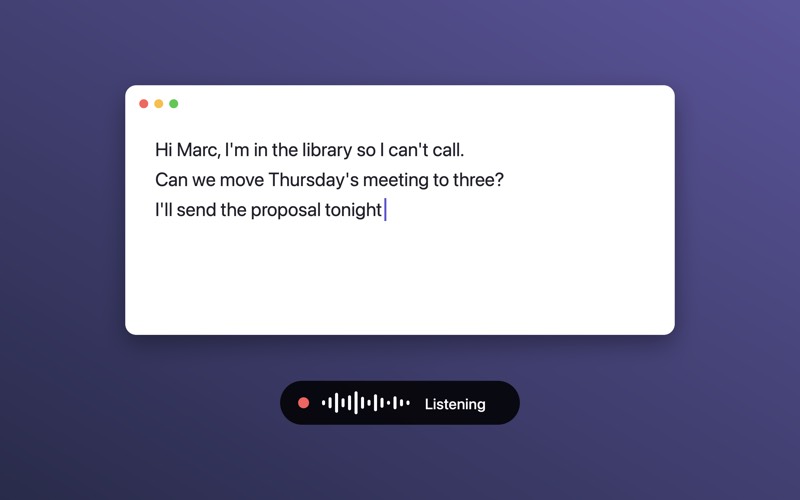
Whisper dictation: hold a shortcut, whisper, and the text is typed at your cursor. Transcription runs on the Mac.
Download for Mac ↗
A plant in the menu bar that grows with every focus session, and wilts when you skip them.
Download for Mac ↗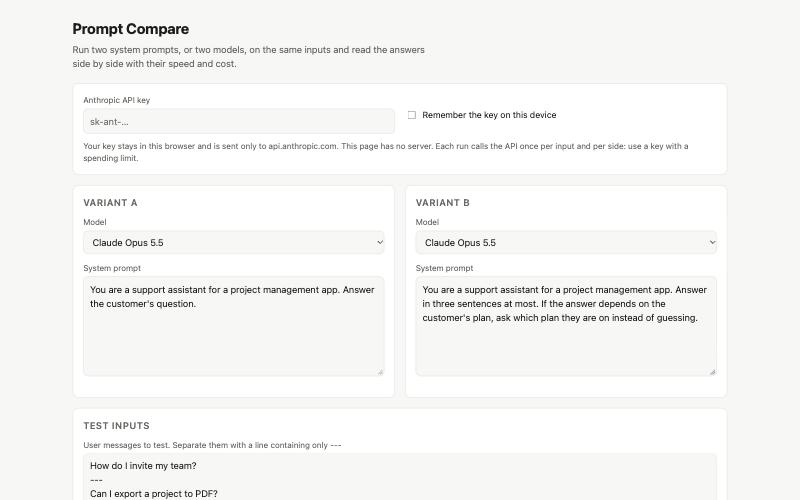
Run two prompts or two Claude models on the same inputs and compare answers, speed and cost.
Open the tool ↗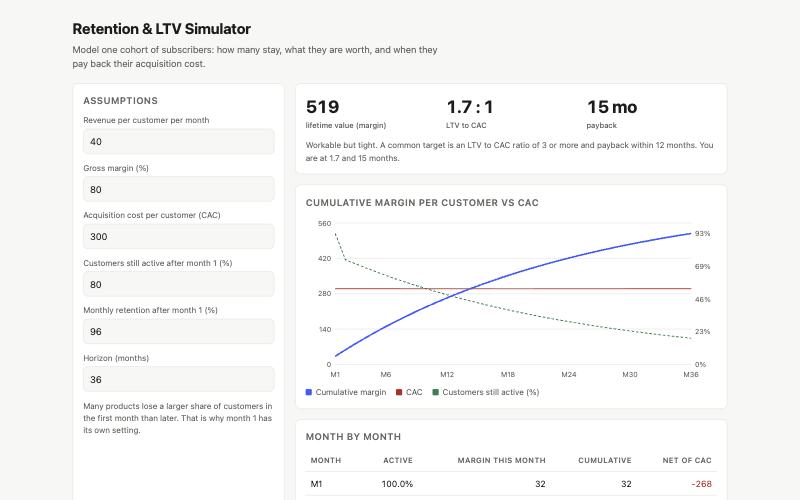
Model a subscriber cohort: retention, lifetime value, LTV to CAC and payback, with the chart.
Open the tool ↗06Skills
Master in Management, Digital Business
Undergraduate — Physics, Mathematics & Business
InterestsTech & AI, product strategy, economics, geopolitics — sailing, running, gym, basketball, American football.
07Contact
I'm open to Head of Product, Product Lead and AI Product Manager roles. If you're looking for a product leader who turns complexity into measurable value, let's talk.